
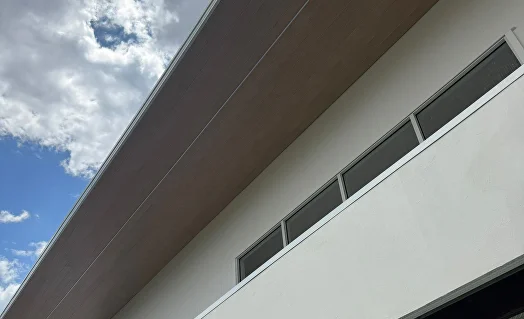
Real timber is beautiful but demanding. Here is a frank comparison of woodgrain aluminium against natural timber cladding for Australian conditions.
The look
Natural timber has genuine depth and ages with character. Woodgrain aluminium replicates the grain convincingly and holds that appearance permanently. If you want the timber look to stay exactly as installed, aluminium wins; if you actively want silvering and patina over time, timber has the edge.
Maintenance
This is the biggest practical difference. Timber cladding needs regular oiling or staining - often every one to three years depending on exposure - plus repairs to split or cupped boards. Aluminium needs an occasional wash and nothing else. Over a twenty-year horizon the maintenance gap is enormous.
Fire and bushfire
Aluminium is non-combustible to AS 1530.1, which matters on bushfire-prone land and in buildings with combustibility requirements. Timber is combustible and, depending on species and BAL rating, may be restricted or require additional treatment.
Movement and durability
Timber expands, contracts, cups and can be attacked by borers and termites. Aluminium is dimensionally stable and immune to rot and insects. Near the coast, marine-grade aluminium also resists the salt air that accelerates timber weathering.
Cost over time
Quality hardwood cladding and woodgrain aluminium are in a similar bracket on supply. The difference shows up over the life of the building: timber adds recurring oiling, repair and eventual replacement costs, while aluminium's lifetime cost stays low. We quote aluminium in AUD per square metre so you can compare directly.
The verdict
If you love the process of maintaining timber and want it to weather naturally, timber is a valid choice. For most Australian homeowners and builders who want the timber look without the upkeep, fire risk and movement, woodgrain aluminium is the more practical option.