
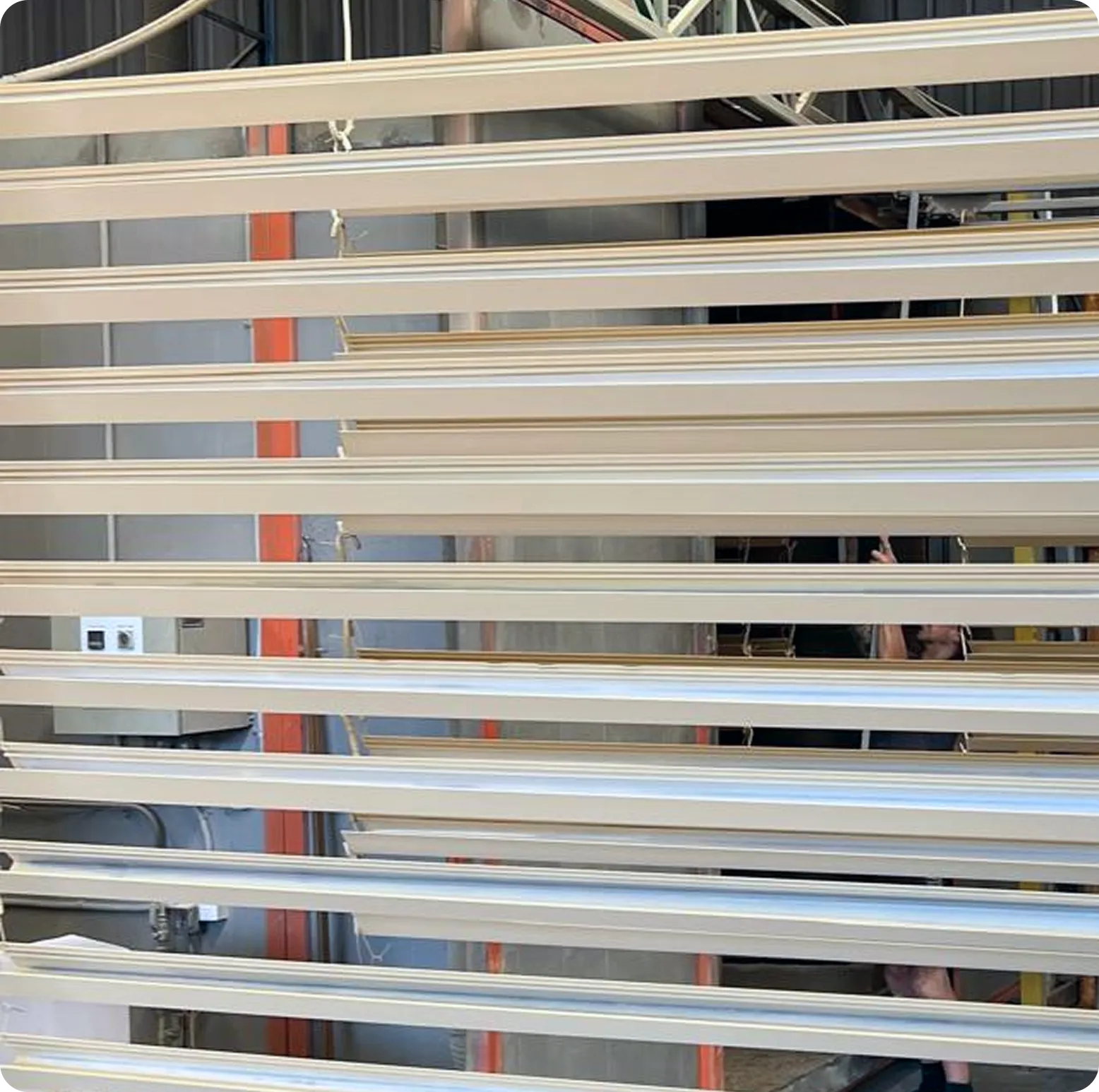
The timber look on aluminium cladding is not paint or a sticker. Here is how the sublimation process bakes a realistic woodgrain into the metal.
It starts with aluminium
Every Woodonali product begins as marine-grade aluminium - either a rolled sheet for cladding boards or an extruded section for battens. Aluminium is chosen because it is light, strong, non-combustible and, critically, it does not absorb moisture. That last point is why it can hold a timber look for decades without the swelling and splitting that ruins real wood.
Powder coat first
Before any grain appears, the bare aluminium is cleaned, pre-treated and given an architectural powder coat in a base colour. This baked-on layer is the foundation of the finish and provides the long-term UV and weather protection that keeps the product looking new in the Australian sun.
The sublimation step
Sublimation is where the timber look is created. A film printed with a high-resolution woodgrain is wrapped around the powder-coated profile, and the whole piece is heated in an oven. Under heat, the ink turns to gas and bonds into the powder coat - it diffuses into the surface rather than sitting on top of it.
Because the grain becomes part of the coating, it will not peel like a laminate or wear off like a printed wrap. The colour runs into the finish, which is why minor scuffs do not expose a different colour underneath.
Why it beats paint and wraps
Painted timber-look finishes sit on the surface and can chip to reveal the substrate. Vinyl wraps can lift at the edges in heat. Sublimation avoids both problems by fusing the image into a baked coating, giving a finish that is both convincing up close and genuinely durable outdoors.
The result
The finished board or batten looks and feels like timber at normal viewing distances, but it is a non-combustible, dimensionally stable aluminium product that needs nothing more than an occasional wash. It is the practical way to keep a timber aesthetic on a building that has to last.