
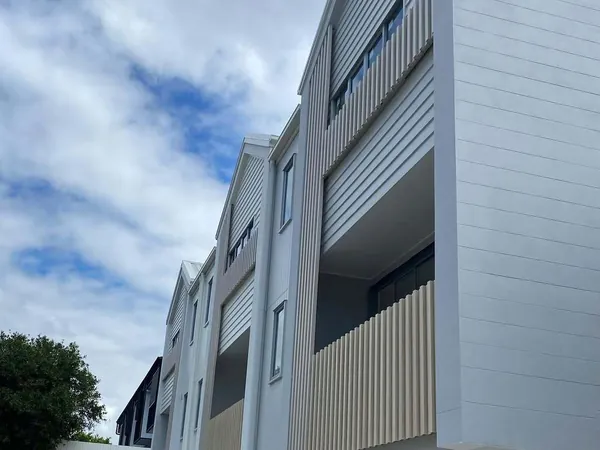
The gap between battens changes everything - privacy, shade, breeze and the look. Here is how to get the spacing right.
Spacing controls privacy
The narrower the gap between battens, the more it blocks sightlines. For a screen where privacy is the priority - between neighbours, or around a bathroom window - a tighter gap relative to the batten width gives near-solid screening while still reading as battens.
Spacing controls light and breeze
Wider gaps let more daylight and airflow through, which suits breezeways, pergolas and screens where you want filtered light rather than a wall. In Australia's climate, keeping air moving through outdoor areas is often as important as privacy.
The angle of view matters
Privacy depends on where people are looking from. A screen that looks open straight-on can be completely private at an angle. If the neighbour's view is oblique, you can often use a wider, more open spacing and still get the privacy you need.
Ceilings and feature walls
On ceilings and feature walls, spacing is about rhythm rather than privacy. Even, considered gaps create the clean repeating shadow lines that make a batten feature look designed rather than busy.
Let us model it
Because the right gap depends on batten width, height and viewing angle, it pays to plan it properly. Tell us your sightlines and we will recommend a batten size and spacing that delivers the privacy and light you are after.