
Our honest verdict
WPC is a solid low-maintenance option for decking and some screening. For cladding and anything fire-sensitive, non-combustible woodgrain aluminium is the more compliant, more heat-stable choice.
What WPC is
Wood-plastic composite blends wood fibre with polymers to mimic timber with less upkeep than real wood. It is popular for decking and some screening and handles moisture well.
Where aluminium differs
WPC contains combustible polymer and wood content, so it is not a non-combustible material and can be restricted on bushfire-prone land and on compliant facades. It can also expand, sag over spans and fade or chalk in strong, sustained sun.
Woodgrain aluminium is non-combustible, rigid over longer spans, and holds a UV-stable baked finish - better suited to vertical cladding, battens and fire-sensitive work.
Honest trade-off
For ground-level decking where fire is not the driver, WPC is reasonable. For cladding, screens, soffits and anything BAL-rated, aluminium is the stronger specification.
The two contenders
Woodgrain aluminium
Solid marine-grade aluminium with a sublimated woodgrain coat. Non-combustible substrate, holds its day-one colour, and needs only an occasional wash - no oiling, no recoating.
WPC composite
Both promise low-maintenance timber looks - but one is metal and non-combustible, the other a polymer composite.
At a glance
Side by side on the points that decide most projects.
| Factor | Woodgrain aluminium | WPC composite |
|---|---|---|
| Combustibility | Non-combustible | Combustible composite |
| Heat/UV | Stable baked finish | Can fade, chalk, expand |
| Spans | Rigid, longer spans | Can sag over distance |
| Best use | Cladding, battens, soffits | Decking, low screening |
The Woodonali product
Architectural cladding that reads as natural timber but is engineered from non-combustible aluminium - the warmth of a hardwood facade without the rot, the repainting or the bushfire worry.
Get a real comparison for your project
Send your elevations or rough areas and we will price the woodgrain aluminium option in AUD, so you can compare it against the alternative on the numbers that matter to you.
Other comparisons
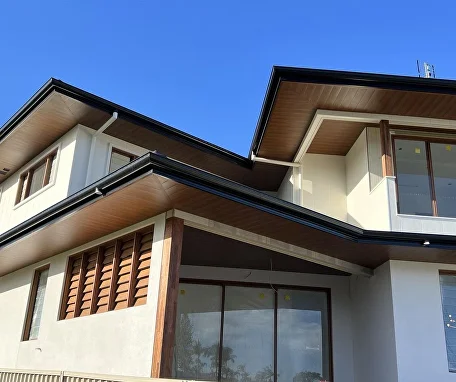
Woodgrain Aluminium Cladding vs Natural Timber Cladding
The look is close; the lifecycle is not. Here is where each material genuinely wins.
Compare ›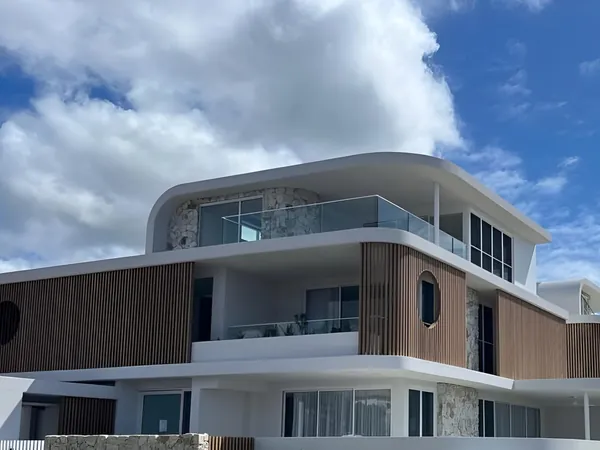
Woodgrain Aluminium vs Composite / ACP Cladding
Both are aluminium-faced. The difference is what sits in the middle - and that matters for fire.
Compare ›
Woodgrain Aluminium vs Fibre Cement Cladding
Fibre cement is the value workhorse; aluminium is lighter and carries a more convincing timber grain.
Compare ›
Woodgrain Aluminium vs Vinyl (PVC) Cladding
Vinyl is cheap and easy; aluminium is non-combustible and holds up far better under Australian sun.
Compare ›
Woodgrain Aluminium vs Colorbond Steel Cladding
Two non-combustible metals with different jobs: steel for crisp solid-colour profiles, aluminium for a warm timber look.
Compare ›
Woodgrain Aluminium vs Brick or Rendered Walls
Masonry is the durable base; woodgrain aluminium is the warm face you add over or beside it.
Compare ›Planning a woodgrain aluminium project?
Talk to our Australian team for obligation-free advice, samples and pricing in AUD.