
Our honest verdict
A painted-on grain sits on the surface and can chip to a different colour underneath. A sublimated grain is fused into the coating, so scuffs do not expose a contrasting layer and it resists peeling.
Painted and wrapped looks
Some timber-look products are achieved with a printed paint layer or a vinyl wrap. They can look fine new, but paint can chip to reveal the substrate and wraps can lift at edges in heat.
Why sublimation lasts
Sublimation diffuses the ink into the powder coat under heat, so the grain is part of the finish, not a film on top. Minor scuffs do not expose a different colour, and there is no edge to peel. It is the most durable way to carry a realistic grain on aluminium.
Honest trade-off
There is little reason to prefer a painted or wrapped grain for an exposed facade. Sublimation costs a little more but is the finish built to last outdoors.
The two contenders
Woodgrain aluminium
Solid marine-grade aluminium with a sublimated woodgrain coat. Non-combustible substrate, holds its day-one colour, and needs only an occasional wash - no oiling, no recoating.
Painted timber-look
Two ways to fake a timber look on metal - and why one lasts much longer.
At a glance
Side by side on the points that decide most projects.
| Factor | Woodgrain aluminium | Painted timber-look |
|---|---|---|
| Grain method | Fused into coating | Printed/wrapped on surface |
| Chip behaviour | No contrasting layer exposed | Reveals substrate |
| Edges | No film to lift | Wraps can lift in heat |
| Outdoor life | Long | Shorter |
The Woodonali product
Architectural cladding that reads as natural timber but is engineered from non-combustible aluminium - the warmth of a hardwood facade without the rot, the repainting or the bushfire worry.
Get a real comparison for your project
Send your elevations or rough areas and we will price the woodgrain aluminium option in AUD, so you can compare it against the alternative on the numbers that matter to you.
Other comparisons
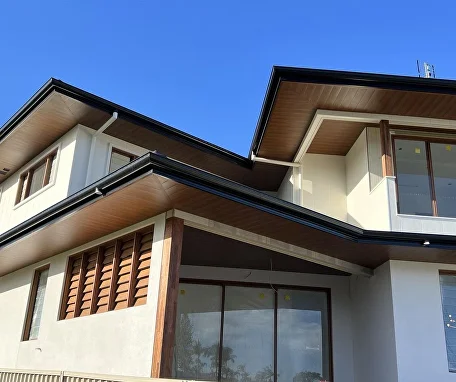
Woodgrain Aluminium Cladding vs Natural Timber Cladding
The look is close; the lifecycle is not. Here is where each material genuinely wins.
Compare ›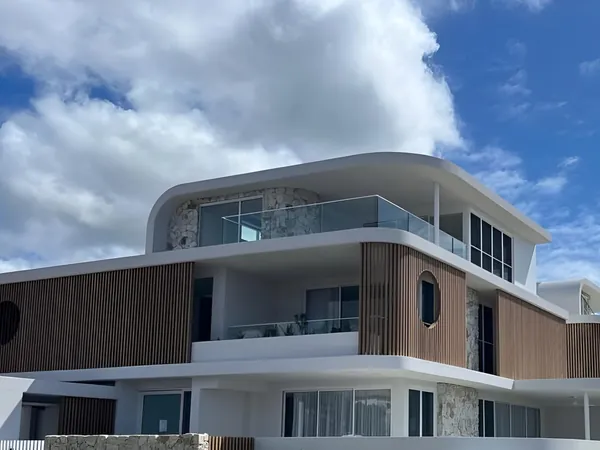
Woodgrain Aluminium vs Composite / ACP Cladding
Both are aluminium-faced. The difference is what sits in the middle - and that matters for fire.
Compare ›
Woodgrain Aluminium vs Fibre Cement Cladding
Fibre cement is the value workhorse; aluminium is lighter and carries a more convincing timber grain.
Compare ›
Woodgrain Aluminium vs Vinyl (PVC) Cladding
Vinyl is cheap and easy; aluminium is non-combustible and holds up far better under Australian sun.
Compare ›
Woodgrain Aluminium vs Colorbond Steel Cladding
Two non-combustible metals with different jobs: steel for crisp solid-colour profiles, aluminium for a warm timber look.
Compare ›
Woodgrain Aluminium vs Brick or Rendered Walls
Masonry is the durable base; woodgrain aluminium is the warm face you add over or beside it.
Compare ›Planning a woodgrain aluminium project?
Talk to our Australian team for obligation-free advice, samples and pricing in AUD.