
Our honest verdict
Timber screens are cheaper and warm when new. Aluminium screens hold their shape, colour and crisp gaps - and suit coastal and bushfire blocks - which is why they last better outdoors.
Timber screens
Lovely new and inexpensive, but slim timber screen battens are prone to bowing and the gaps drift as the wood moves. They grey and need re-oiling, and they rot at ground fixings.
Aluminium screens
Made-to-measure aluminium screens keep their exact gap and shadow line, resist coastal salt, and are non-combustible. They stay sharp where timber screens go soft within a few seasons.
Honest trade-off
A short-life or sheltered screen on a budget can be timber. For a permanent boundary, a coastal block or a fire-rated setting, aluminium is the durable answer.
The two contenders
Woodgrain aluminium
Solid marine-grade aluminium with a sublimated woodgrain coat. Non-combustible substrate, holds its day-one colour, and needs only an occasional wash - no oiling, no recoating.
Timber screens
For boundary and pool-equipment screening, the material choice decides how it looks in five years.
At a glance
Side by side on the points that decide most projects.
| Factor | Woodgrain aluminium | Timber screens |
|---|---|---|
| Gap consistency | Holds exactly | Drifts as timber moves |
| Coastal | Marine-grade suits salt | Greys and weathers |
| Combustibility | Non-combustible | Combustible |
| Upkeep | Occasional wash | Re-oil periodically |
| Cost | Higher | Lower |
The Woodonali product
Custom timber-look privacy screens that block sightlines and soften boundaries while letting the breeze through - made to measure from non-combustible aluminium.
Get a real comparison for your project
Send your elevations or rough areas and we will price the woodgrain aluminium option in AUD, so you can compare it against the alternative on the numbers that matter to you.
Other comparisons
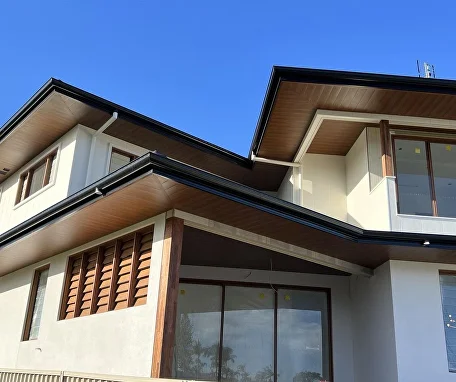
Woodgrain Aluminium Cladding vs Natural Timber Cladding
The look is close; the lifecycle is not. Here is where each material genuinely wins.
Compare ›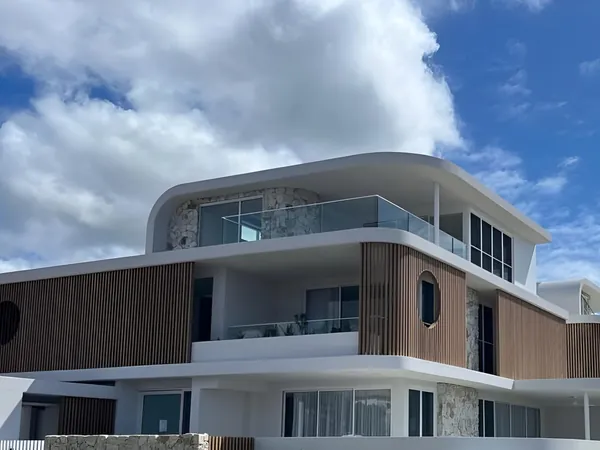
Woodgrain Aluminium vs Composite / ACP Cladding
Both are aluminium-faced. The difference is what sits in the middle - and that matters for fire.
Compare ›
Woodgrain Aluminium vs Fibre Cement Cladding
Fibre cement is the value workhorse; aluminium is lighter and carries a more convincing timber grain.
Compare ›
Woodgrain Aluminium vs Vinyl (PVC) Cladding
Vinyl is cheap and easy; aluminium is non-combustible and holds up far better under Australian sun.
Compare ›
Woodgrain Aluminium vs Colorbond Steel Cladding
Two non-combustible metals with different jobs: steel for crisp solid-colour profiles, aluminium for a warm timber look.
Compare ›
Woodgrain Aluminium vs Brick or Rendered Walls
Masonry is the durable base; woodgrain aluminium is the warm face you add over or beside it.
Compare ›Planning a woodgrain aluminium project?
Talk to our Australian team for obligation-free advice, samples and pricing in AUD.